Morgridge Hall achieves LEED Platinum certification
The new home of the College of Computing & Artificial Intelligence achieves the highest level of certification awarded by the U.S. Green Building Council’s Leadership in Energy and Environmental Design (LEED) program.
From its earliest planning stages, Morgridge Hall was designed with an ambitious environmental goal: achieve LEED Platinum certification, the highest level of recognition for sustainable building design and construction.
Now, that goal has officially been realized.
The 343,000-square-foot building, home of the College of Computing & Artificial Intelligence, has earned LEED Platinum certification from the U.S. Green Building Council. The internationally recognized certification evaluates buildings across measures including energy efficiency, water conversation, materials, and indoor environmental quality.
The achievement reflects years of intentional decisions about how Morgridge Hall would be designed and built, from its energy and water systems to its landscaping and indoor environments. A high-performance building exterior and energy-efficient lighting help reduce energy consumption by 61 percent compared with common benchmarks, and water-efficient design reduces indoor water use by 30 percent. The building also generates some of its own energy: nearly 360 rooftop solar panels generate enough energy annually to power the equivalent of 182 Wisconsin homes.
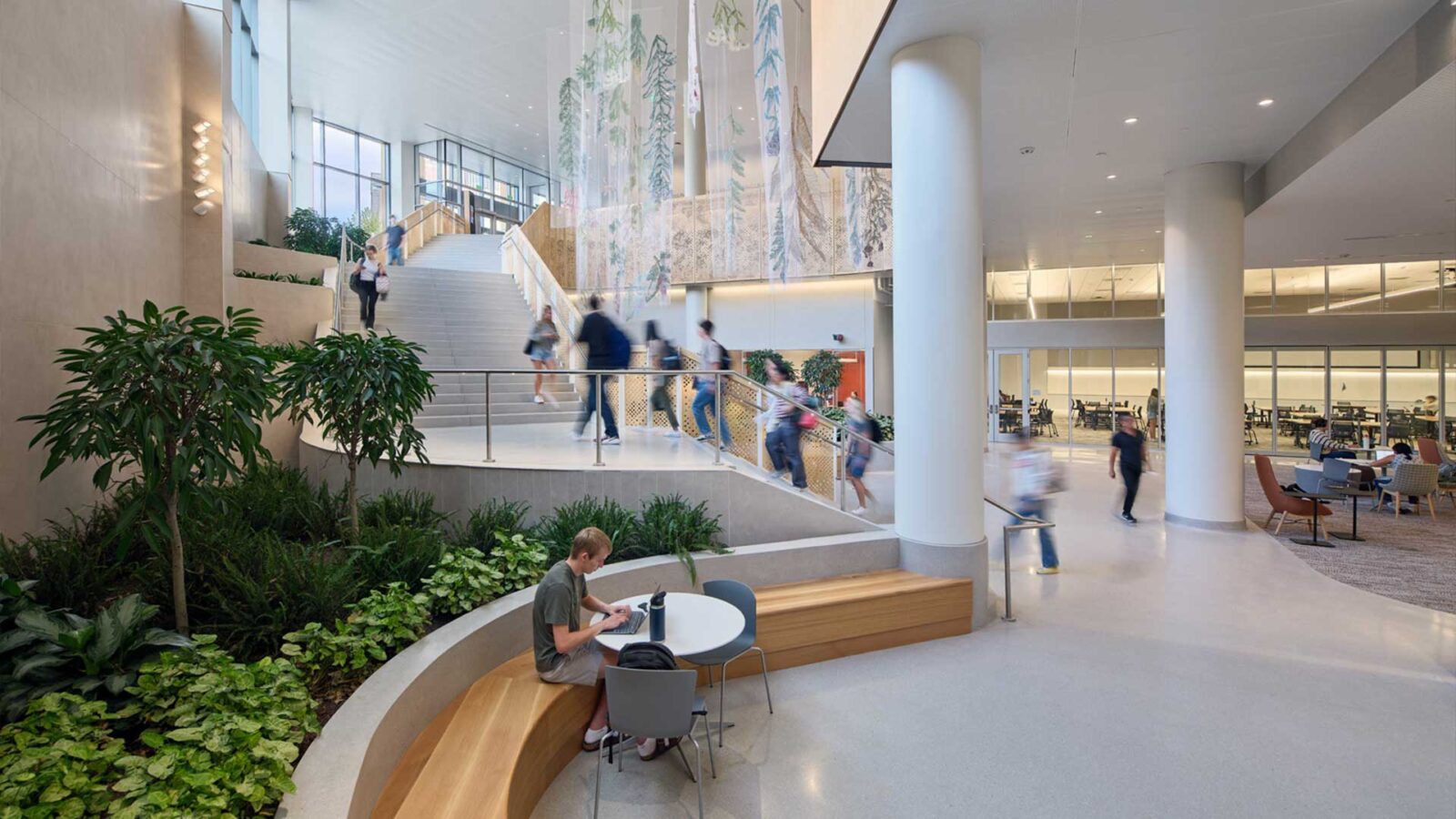
Beyond energy and water efficiency, Morgridge Hall was designed to support the surrounding environment. Stormwater is captured and reused to support plant life, and more than 80 percent of the species planted across the site are native to Wisconsin, including prairie and savanna vegetation. Outdoors, green roofs and terraces create habitat for insects and nesting birds, while indoor gardens and living green walls create restorative pockets of nature throughout the building.
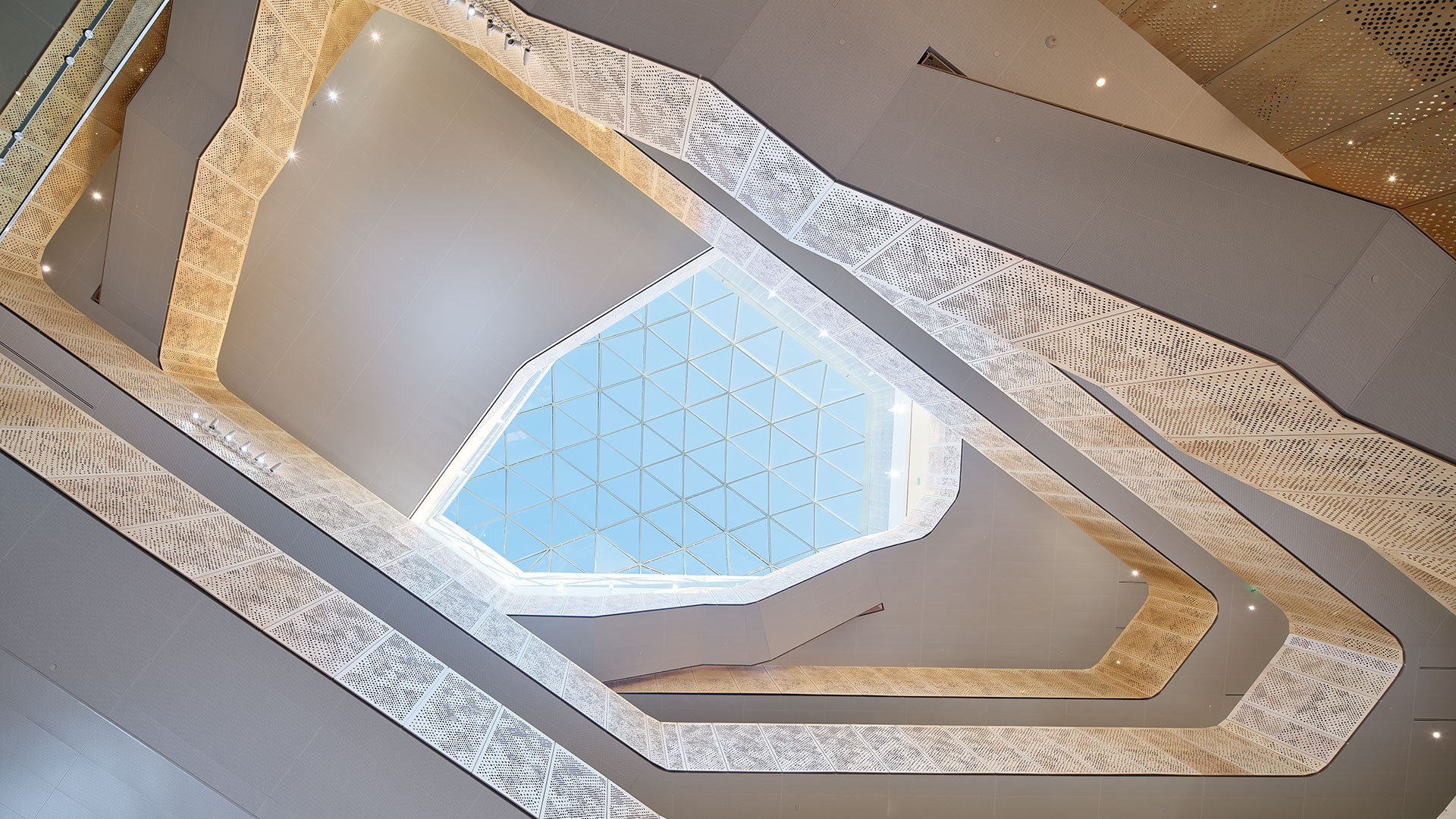
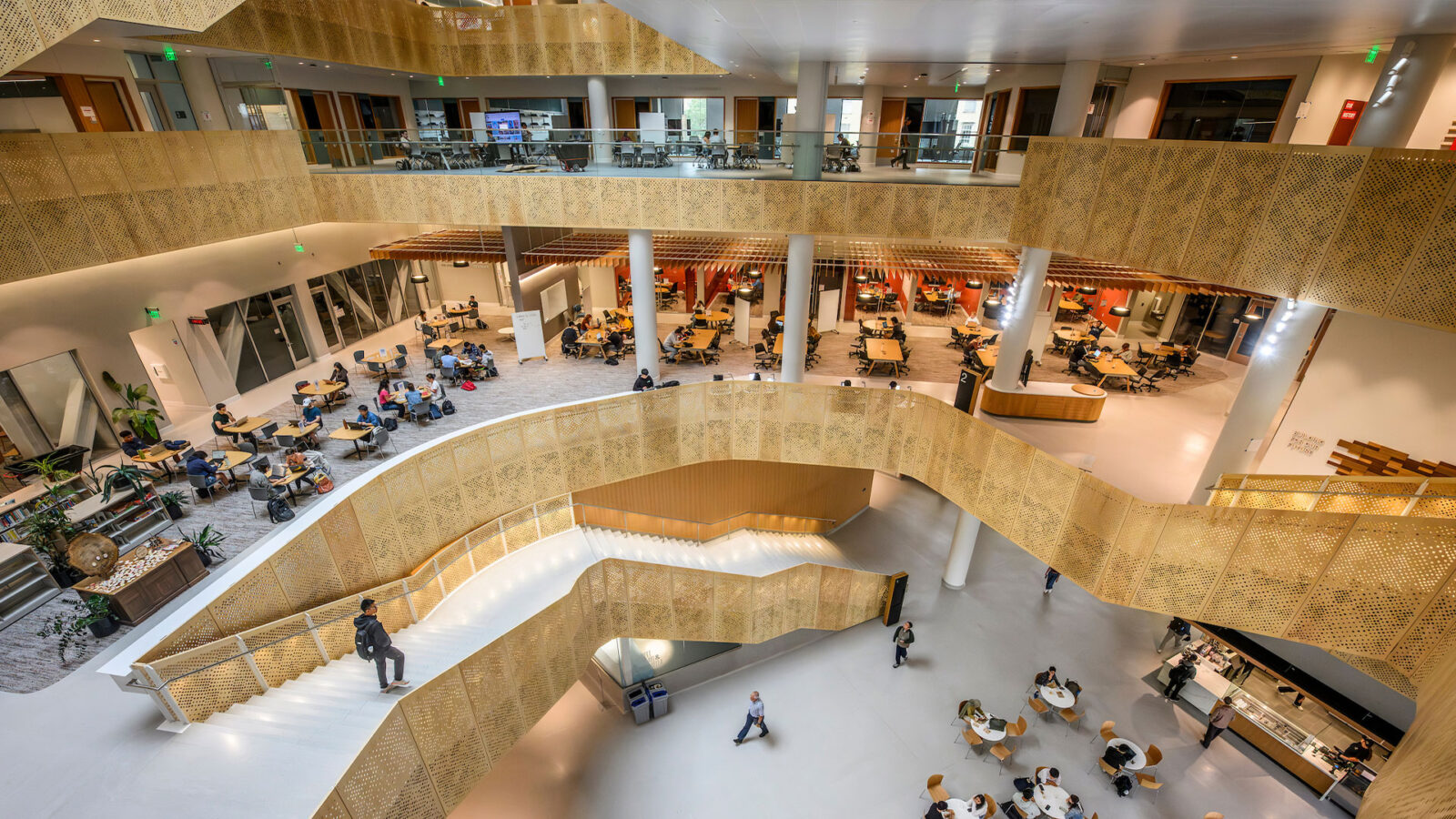
Morgridge Hall’s daylight-filled central atrium and prominent staircase offer views across its seven floors, and glass walls and flexible work areas make people and activities visible throughout the building. These shared spaces create more opportunities for students, faculty, and staff from different disciplines to cross paths. The architecture also reflects the Wisconsin landscape and surrounding communities. Its form takes inspiration from the state’s unglaciated landscape and winding rivers, while patterns across the facade draw from regional craft traditions.
The honor demonstrates what a modern academic building can be: environmentally ambitious and built to foster connection.


Recent:
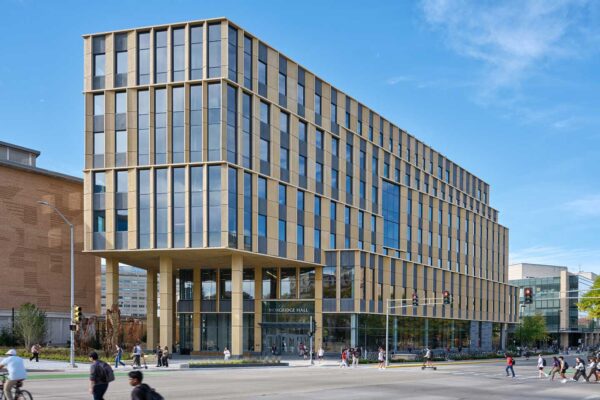
Morgridge Hall recognized for design excellence by AIA Wisconsin
The American Institute of Architects Wisconsin recognized Morgridge Hall, home of the College of Computing & Artificial Intelligence, with a 2026 Merit Award for design excellence. The annual awards celebrate outstanding architecture.