Meet the students making space for Women in Entrepreneurship
The student organization is enabling hundreds of women at UW–Madison to step confidently into entrepreneurial spaces.
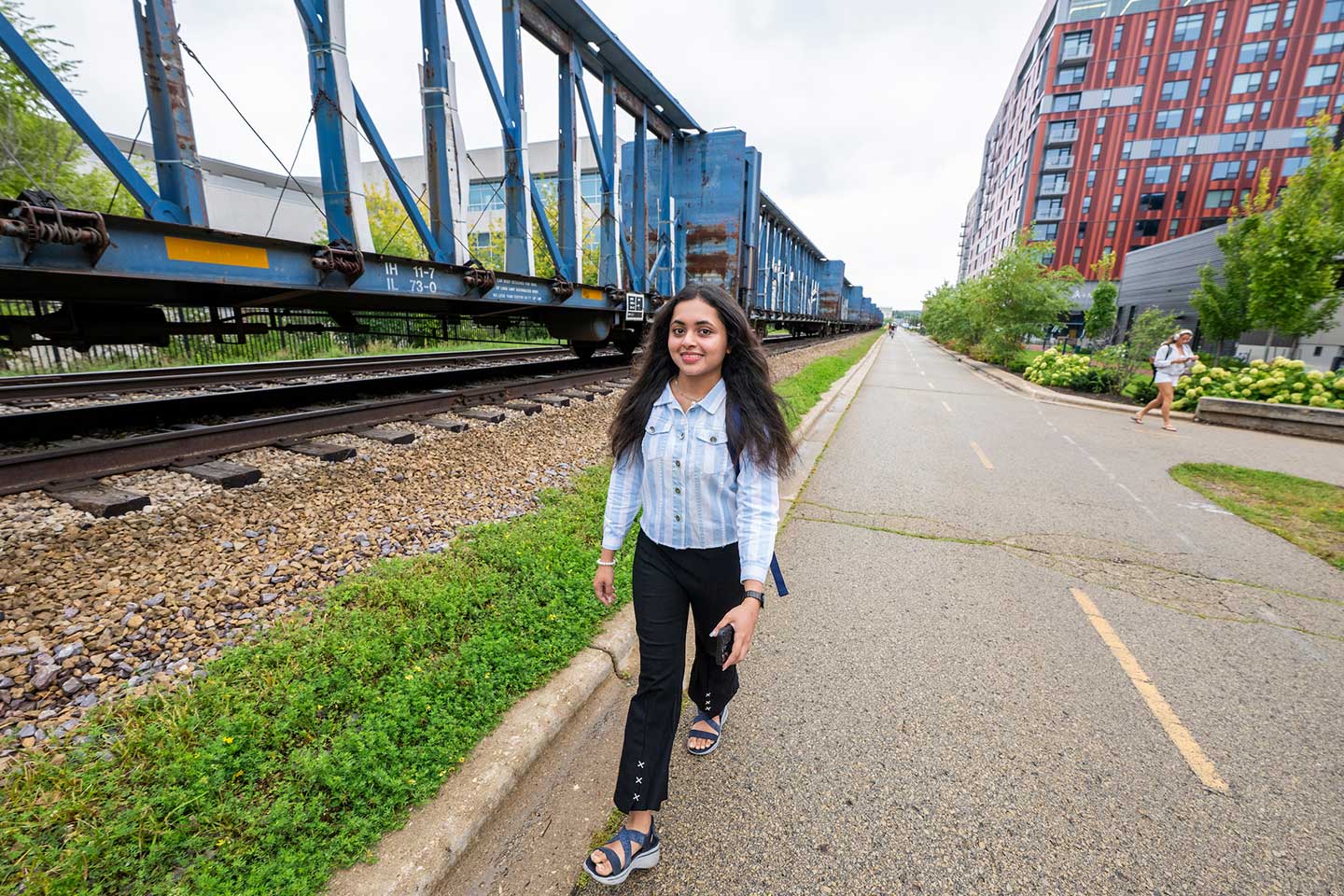
As Computer Sciences and Data Science double majors who were highly engaged on campus, Trinity Krohn x’27 and Alka Lakadia x’27 had noticed a pattern: Women were drastically underrepresented in spaces focused on startups and entrepreneurship. Last year, the two students decided that needed to change. They founded the Women in Entrepreneurship (WE) student organization to give women across UW–Madison a low-pressure entry point into an ecosystem that can otherwise feel closed off.
The gap Krohn and Lakadia saw on campus is a symptom of much larger issue. Globally, just 15% of technology startup founders are women, and in the United States, women constitute only 11% of investing partners at venture capital firms. WE aims to reduce that disparity, one Badger founder at a time.
Since launching, the club has fostered a fast-growing community of hundreds of women from across the university and connected them with local founders through workshops, events, and a spring gala. “A lot of students are exploring entrepreneurship for the first time, and they feel like this is a shared space where they can speak their mind,” Lakadia said. Krohn echoed that sentiment: “You don’t have to have your own business to be in our club.”
With this approach, the club is encouraging women to enter the world of entrepreneurship at the College of Computing & Artificial Intelligence (CAI) and across UW–Madison.

A lot of students are exploring entrepreneurship for the first time, and they feel like this is a shared space where they can speak their mind.
Room to grow
As the club has grown, Krohn and Lakadia have watched students who show up at meetings become more confident in themselves. “Some people were hesitant to speak up at first, but now they’re much more involved,” Lakadia said. The club has hosted workshops on ideation, marketing, and pitching, which have helped students practice talking about their interests and sharing their perspectives in low-pressure settings.
Krohn added that she has seen the same shift ripple out into other entrepreneurship-focused events across campus. “The more they get themselves out there, the easier it gets,” she said. Even if members don’t return to every WE event, Krohn says seeing them show up elsewhere in the ecosystem “makes me just as happy.” For instance, she noticed many club members at the startup career fair hosted at StartingBlock Madison this spring. Students who first encountered entrepreneurship through WE are now attending pitch nights, founder talks, and community meetups around the city and beyond, often in rooms where women were previously underrepresented. “Ultimately, that’s what we’re trying to solve here,” Krohn explained.
A gala with intention
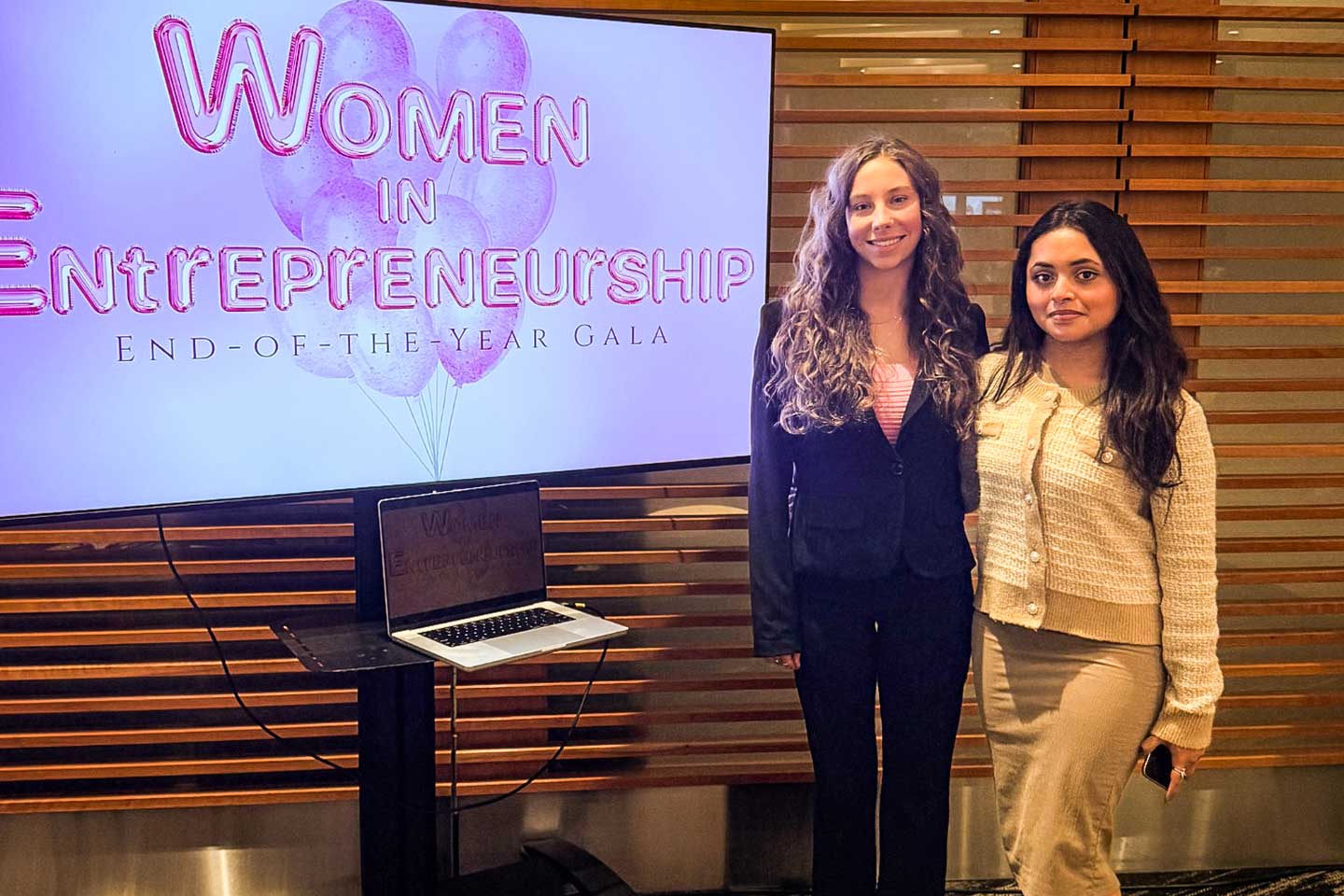
This spring, the club hosted its inaugural Women and Entrepreneurship Gala, bringing students together with Madison-area founders spanning venture capital, AI, consulting, and consumer products. A flurry of early RSVPs “showed that a lot of people are interested in attending something like this,” Lakadia said.
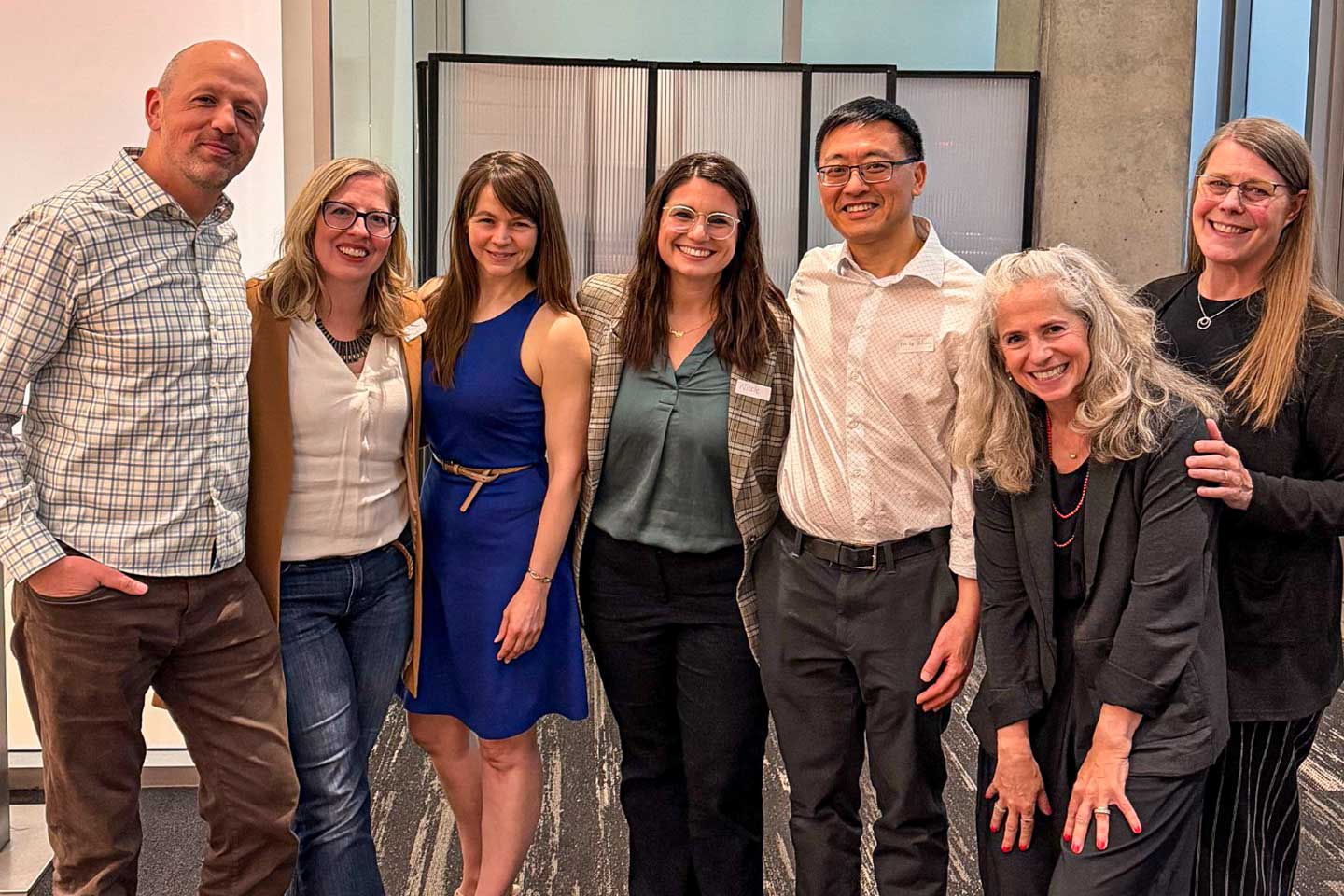
The lineup reflected the breadth of Madison’s entrepreneurial ecosystem, from startup founders like Kristin Isaac of Strudel AI and Mike Zhang of WiscAI to UW-affiliated leaders like Maia Donohue of the Weinert Center for Entrepreneurship. But the format mattered as much as the speakers; every table featured one entrepreneur, giving students direct access to someone with experience building a company. “We wanted each table to really get value out of this gala,” Krohn emphasized.
That structure paid off. Several founders arrived with internship opportunities in hand, turning a single evening into a direct pathway toward startup experience. For that reason, “I personally felt really inspired after the gala,” Lakadia said.
After the success of the gala, the leaders are already ideating what comes next, including the potential for an accelerator program that could help fast-track students’ pathways to becoming founders.
On the horizon
With a successful first year behind them, Krohn and Lakadia are planning what comes next. They hope to continue hosting events while exploring more hands-on opportunities for students. Lakadia is exploring a small accelerator-style cohort that would help students develop an idea into a tangible project. “I want to start a program where people who have ideas can build something meaningful by the end of the semester,” she said.
Krohn wants to continue to deepen connections between students and Madison founders. A formal mentorship pipeline is one of her goals, along with career treks to cities like Austin or Chicago. The leaders also hope to launch a LinkedIn community to connect students with women entrepreneurs in Madison and beyond. “Your network has a lot of power,” Lakadia said. “We want to provide our members access to the larger community of women entrepreneurs.”
Krohn and Lakadia represent a growing number of students across CAI who are using their computing and data training to build both technical skills and new communities, expanding the number of students who see themselves as innovators and entrepreneurs. WE’s early success shows that the entire entrepreneurial ecosystem grows stronger when women are in the room and at the table. And the club’s impact is just beginning; after all, it is still an early-stage startup itself.
Learn more about Women in Entrepreneurship or follow along on Instagram.
Related:
Celebrating spring 2026 graduates
From healthcare research to building campus community, this year’s crop of CDIS graduates is as impressive and ambitious as ever. Here’s to the class of 2026.