College of Computing & Artificial Intelligence co-leads College of Engineering initiative to advance embodied AI
Bilge Mutlu, the Stephen Wright Professor of Computer Sciences and a researcher in human-robot interaction, will co-lead the campus-wide research initiative.
The University of Wisconsin–Madison College of Computing & Artificial Intelligence (CAI) will co-lead a new campuswide research initiative focused on embodied artificial intelligence, bringing together expertise to develop autonomous systems that work safely and effectively alongside people. The initiative is one of six ambitious research “moonshots” launched by the College of Engineering under the leadership of Grainger Dean Devesh Ranjan, bringing together researchers from across UW–Madison around major opportunities for discovery and innovation.
Bilge Mutlu, the Stephen Wright Professor of Computer Sciences in the College of Computing & Artificial Intelligence, and Tony McDonald, associate professor of Industrial and Systems Engineering in the College of Engineering, will co-lead the embodied AI initiative. Researchers will shape a shared research agenda, foster new collaborations across disciplines and with industry partners, and pursue funding to tackle some of the most challenging questions in embodied AI.
Embodied AI brings artificial intelligence into the physical world through robots and other autonomous systems that can perceive their surroundings, make decisions, and take action. As these systems increasingly operate in real-world environments, such as workplaces, hospitals, and laboratories, one of the most difficult challenges is ensuring they effectively and safely interact with the people around them.
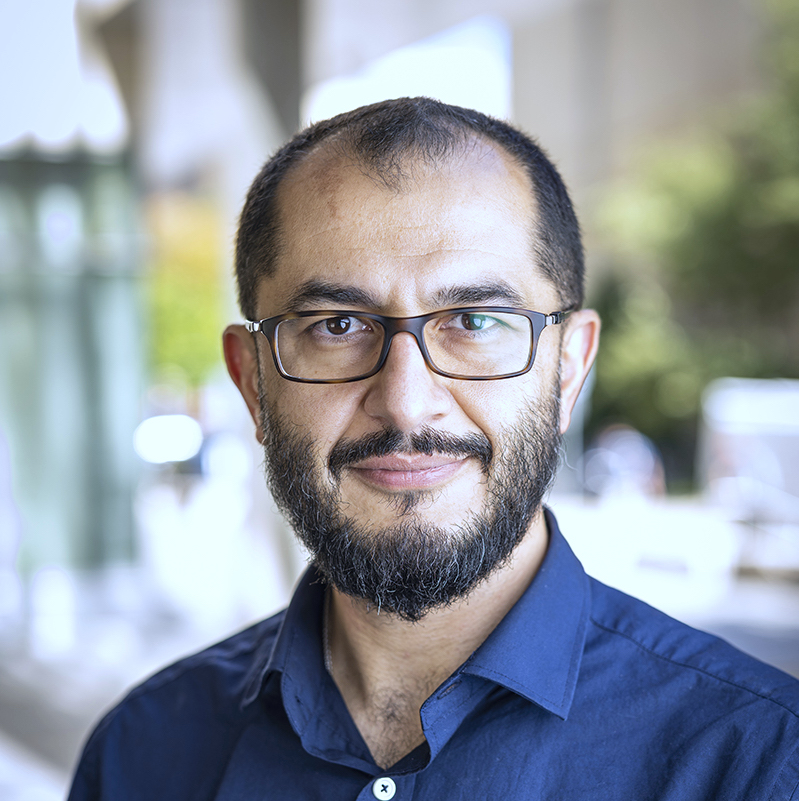
“We are entering a period when AI steps off the screen and into the physical world … [these systems] have to serve and earn the trust of the people who live and work alongside them, or they do not work at all.”
“We are entering a period when AI steps off the screen and into the physical world, into our workplaces, our laboratories, our hospitals, and our homes,” says Mutlu. “These systems should embody the Wisconsin Idea as much as they embody AI: they have to serve and earn the trust of the people who live and work alongside them, or they do not work at all.”
The initiative draws on a growing area of strength at UW–Madison, with more than 20 faculty across CAI and Engineering working in robotics and embodied AI. CAI faculty will pair expertise in robotics and artificial intelligence with a deep understanding of how people interact and work with technology — a combination that will be central to the moonshot.
“We already have faculty advancing many of the technologies and research areas that underpin embodied AI,” says Paul Barford, chair of the Department of Computer Sciences. “That work builds on longstanding strengths in computer science at UW–Madison, and embodied AI is bringing those areas together in new ways.”
CAI faculty joining the moonshot bring expertise spanning reinforcement learning, human-robot teaming, computer vision, accessibility, machine learning, and new ways for robots to sense and understand their surroundings:
- Michael Gleicher — computer vision
- Mohit Gupta — computer vision
- Mike Hagenow — human-robot teaming
- Josiah Hanna — reinforcement learning
- Heather Kim (incoming faculty) — wearable technologies for health
- Bilge Mutlu — robotics and human-robot interaction
- Akarsh Prabhakara — sensing technologies for robotics
- Fred Sala — machine learning and foundation models
- Vikas Singh — computer vision
- Yuhang Zhao — accessibility and augmented and virtual reality
That expertise is already being applied across disciplines: Hanna, for example, is contributing to a project bringing robots into materials science laboratories, while Mutlu is developing embodied AI for stem cell laboratory procedures. Additional faculty are expected to join as the initiative develops.
“One of the opportunities we saw in creating CAI was the ability to bring computing and AI expertise together with researchers across campus in new ways,” says Founding Dean Remzi Arpaci-Dusseau. “Devesh’s leadership in launching the moonshots has created an exciting opportunity to do exactly that. Embodied AI brings together strengths from across our colleges and campus to pursue questions that none of us could tackle as effectively alone.”
The moonshot will also build on existing interdisciplinary training at UW–Madison. INTEGRATE, a National Science Foundation Research Traineeship program, brings together graduate students and faculty from multiple disciplines to explore how robots can be integrated into the future of work. The moonshot will also connect with a new monthly robotics seminar series that launched on October 2, open to students and faculty campuswide.
The next phase of the moonshot will focus on defining research priorities, expanding the team, and identifying new opportunities for collaboration.
Recent:

Shannon Timm named chief advancement officer and chief of staff for UW–Madison College of Computing & Artificial Intelligence
As a close advisor to Founding Dean Remzi Arpaci-Dusseau, Timm will help set priorities, coordinate major initiatives, and connect work across the organization.