Can computing keep up with AI’s energy demands?
AI is reshaping everything, but behind it lies a rapidly growing network of data centers — and a need for computers that can do more with less energy.
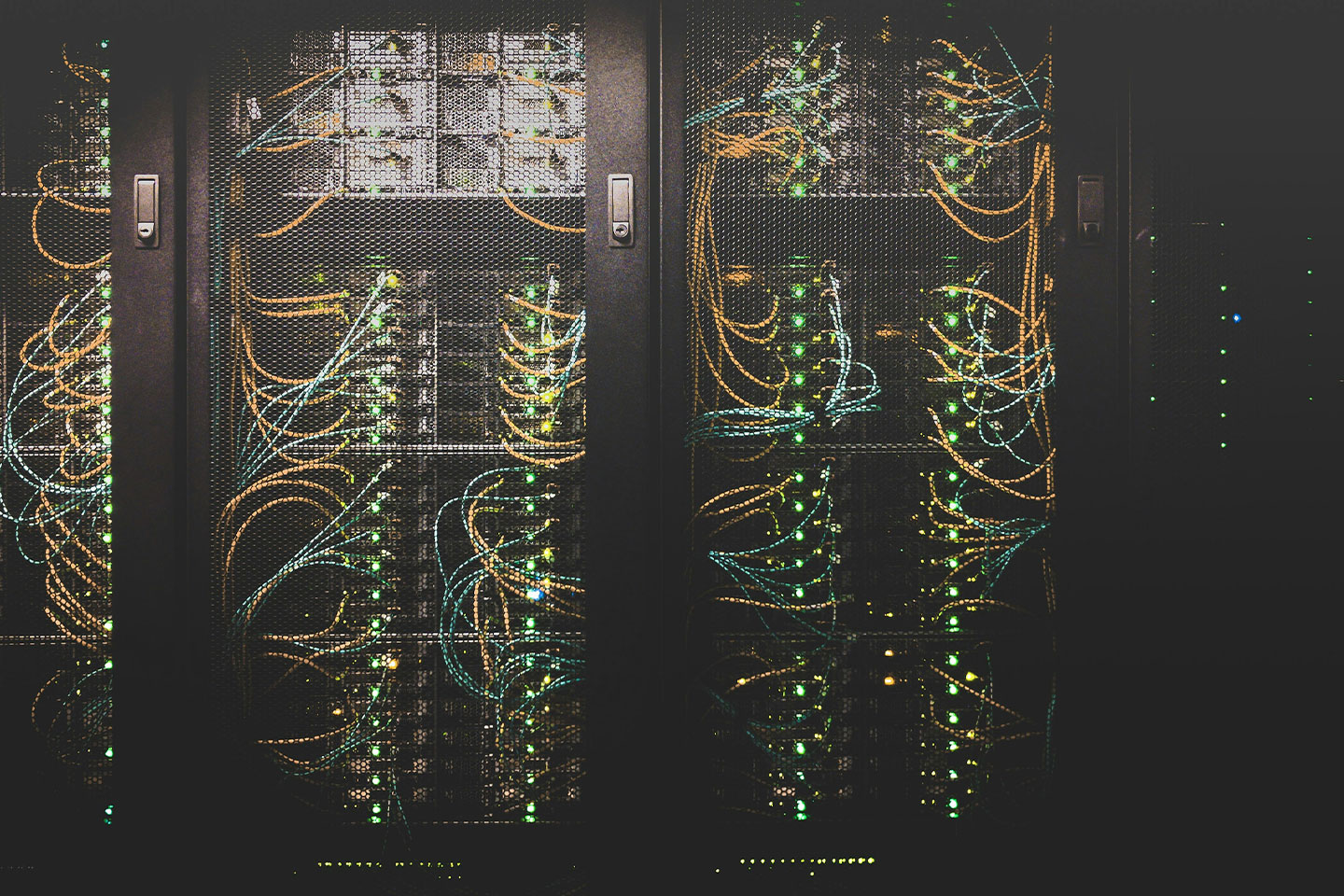
Artificial intelligence has dramatically increased the demand for computing power. Training modern AI models and supporting increasingly sophisticated scientific research, which increasingly blends AI with traditional scientific approaches, now requires warehouse-sized data centers containing thousands of specialized processors working together around the clock.
For decades, advances in computing have been measured largely by one goal: performance. Faster computers enabled larger scientific simulations and increasingly capable artificial intelligence. As computing systems have grown in size and complexity, however, researchers are increasingly confronting a new challenge: the amount of energy required to power them.
Matt Sinclair and Shivaram Venkataraman, associate professors of computer science in UW–Madison’s College of Computing & Artificial Intelligence, are exploring how computing systems can become more energy efficient by examining everything from the processors powering modern supercomputers to the software coordinating thousands of machines working together.
Why does AI require so much energy?
Modern artificial intelligence is powered by large-scale computing systems such as data centers — large facilities housing thousands of interconnected computers working together as a single system. At the heart of these modern systems are graphics processing units, or GPUs, specialized processors designed to perform the calculations required by AI. Working together, tens of thousands of these processors can solve pieces of larger problems simultaneously.
In many ways, a data center resembles a city. Individual processors perform their own work, but the system depends on the infrastructure that connects them. Just as a city relies on roads, utilities, and public services, computing systems rely on networks, memory, and software to move information efficiently between thousands of processors. Every one of those components requires energy and as these systems grow, so does their energy consumption.
“AI and data centers have enormous potential, but also significant challenges. Do we want to be active participants or be on the sidelines?”
Rethinking how computers are designed
For decades, advances in computing were measured largely by performance, however Sinclair believes that is beginning to change: “Within a decade, energy efficiency will likely overtake computing performance as a primary design consideration.” Rather than asking how to build a faster or more powerful processor, researchers are increasingly asking how every part of a computing system can work together more efficiently, an approach known as codesign — developing hardware and software together, rather than optimizing each independently.
Codesign is central to Sinclair and Venkataraman’s work, bringing together their expertise in computer hardware and systems software. Sinclair studies the hardware powering modern computing systems, and Venkataraman focuses on how those systems operate once thousands of processors begin working together. Venkataraman’s research explores how software coordinates increasingly complex workloads, determines where computations occur, and ensures hardware consumes as little energy as possible to perform the computations, an approach known as codesign: “Codesign means the coordination software is aware of specific hardware characteristics,” explains Venkataraman. “By taking those characteristics into account, we can reduce the energy used by computation running across a large number of processors.”

For example, in prior work, Sinclair and Venkataraman, with their students, published a paper at the 2024 International Conference for High Performance Computing, Networking, Storage, and Analysis, the leading conference in high-performance computing. Their research examined how to design large-scale schedulers that coordinate software running across the many components of modern supercomputers and showed that by taking into account how different hardware processors behave, these schedulers can improve performance while reducing energy use.
Extending beyond UW–Madison
Through the Department of Energy’s Genesis Mission, Venkataraman and Sinclair are collaborating with researchers from the University of Virginia, Fermilab, and Oak Ridge National Laboratory to explore new approaches to designing future computing systems. The team is investigating how more energy-efficient computing systems can be designed and tested across real-world scientific applications.
The project also reflects a broader shift in computing. Addressing AI’s growing energy demands increasingly requires expertise spanning computer architecture, systems software, engineering, and the scientific disciplines that rely on high-performance computing. Advances are unlikely to come from a single breakthrough, but from bringing those perspectives together.
Recent:
As AI advances, UW–Madison researchers tackle growing security challenges
Two leading cybersecurity researchers at UW–Madison joined hundreds of scientists in signing an open letter warning about the risks posed by increasingly capable AI systems.