Seven students receive College of Computing & Artificial Intelligence scholarships
Undergraduates from across the Departments of Computer Sciences, Statistics, and the Information School were named recipients in three scholarship programs.
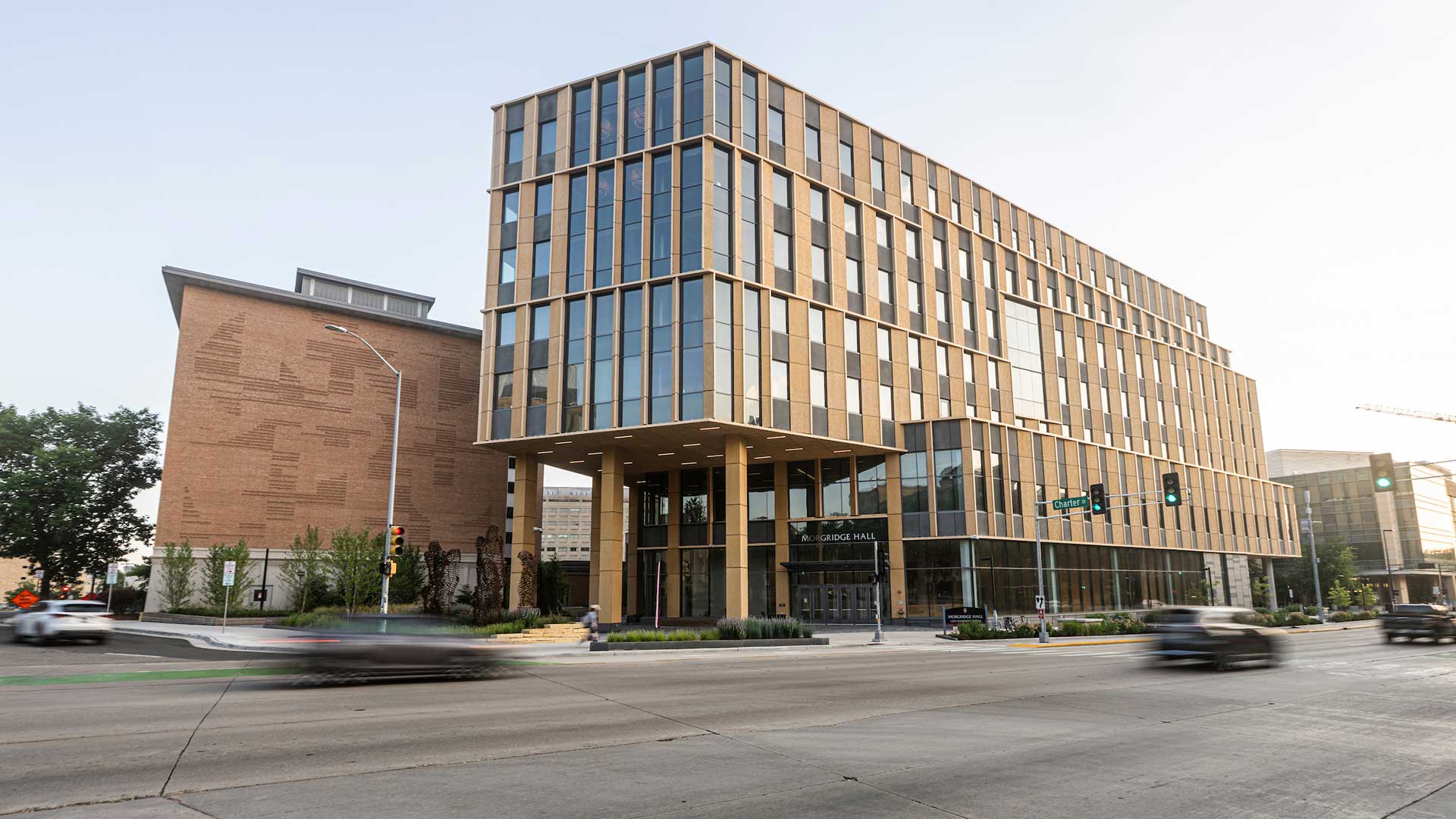
The College of Computing & Artificial Intelligence (CAI) is proud to celebrate seven undergraduate scholarship recipients for the College’s inaugural academic years. These talented students hail from diverse backgrounds and pursue varied academic pathways and research interests, representing the next generation of leaders in computing, data science, information science, and artificial intelligence:
- Arun Pancholia Scholar: Alka Lakadia
- Deloitte Foundation Scholar: Soham Vazirani
- CAI Founding Scholars: Priyansh Bansal, Joshua Moon, Eleanor Treinen, Yuchen (Lyrie) Yan, Sungmin Yuk
The generous support of donors and organizational partners helps these outstanding students focus on their education and research while easing their financial burdens. Meet all seven scholarship recipients below.
Arun Pancholia Scholarship
The Arun Pancholia Scholarship honors the memory of Arun Pancholia, a UW–Madison Data Science student whose untimely departure in 2022 left an indelible mark on all who knew him. Through this scholarship, Arun’s family continues to honor his legacy of academic excellence and his belief in the transformative power of education.
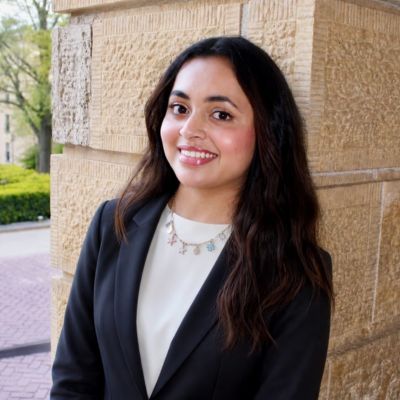
Alka Lakadia, 2026-27 Arun Pancholia Scholar
Alka Lakadia x’27 is a senior from Ahmedabad, India, pursuing a double major in Computer Sciences and Data Science alongside certificates in Economics and Entrepreneurship.
Lakadia is deeply engaged in applying technical systems to practical challenges. She is the founder of DermaVision, an AI-powered dermatology platform, and has held leadership roles in student organizations across campus, including as vice president of DotData — where she helped organize MadData, the organization’s largest hackathon in five years — and as co-founder of Women in Entrepreneurship.
“Having experienced what it feels like to enter new environments without a roadmap, I am intentional about creating spaces where others feel supported and included,” Lakadia said. “[This] allows me to dedicate more time to coursework, research, and building impactful projects as I continue to pursue opportunities in applied AI and entrepreneurship,” she added.
Deloitte Foundation Scholarship
The Deloitte Foundation Scholarship Fund was established by the Deloitte University Relations Team and is funded by Deloitte employees to support undergraduate students with demonstrated interest in technical roles.
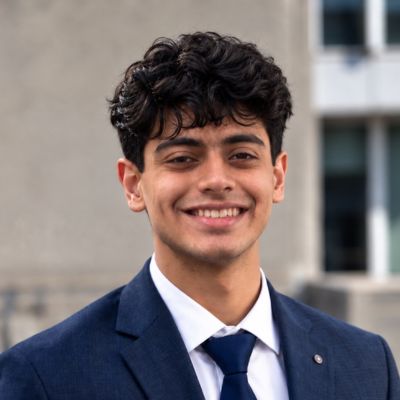
Soham Vazirani, 2026-27 Deloitte Foundation Scholar
Soham Vazirani x’27 is a senior from Mumbai, India, studying Computer Sciences and Mathematics. Vazirani’s technical interests lie at the intersection of deep learning, quantitative finance, and artificial intelligence.
His experience includes developing deep learning architectures for financial forecasting, serving as a financial research intern at Shepherd Ventures, working as a course assistant for MATH 340, and conducting research on Graph Neural Networks, a type of artificial neural network designed to process data structured as graphs.
With the Deloitte Foundation Scholarship, “I hope to continue building a career at the intersection of AI, mathematics, and quantitative analysis, where I can contribute to technically challenging and impactful work while continuing to grow as a researcher and problem-solver,” Vazirani said.
CAI Founding Scholars
Established in celebration of the launch of CAI in 2026, this scholarship recognizes outstanding undergraduate students across all majors within the departments that make up the college. Supported by generous annual fund donors, this scholarship honors students who demonstrate academic excellence, leadership, and a commitment to shaping the future of computing and artificial intelligence at the intersection of technology, humanity and societal impact.

Priyansh Bansal, 2026-27 Founding Scholar
Priyansh Bansal x’26 is a senior from Delhi, India, studying Computer Sciences. Bansal focuses on building high-impact computing solutions in areas like sustainability and healthcare.
On campus, he has worked with Data Science for Sustainable Development to build tools for NGOs, contributed to a campus-wide energy dashboard with the Office of Sustainability, and helped organize events through Google Developer Group and the Claude Builders Club.
“I see … collaboration as central to the future of AI. Systems will need input from multiple disciplines to be practical, responsible, and widely usable,” Bansal said. “CAI will play an important role in creating these connections, and I want to contribute by building projects and communities that link technical work with real needs.”

Joshua Moon, 2026-27 Founding Scholar
Joshua Moon x’28 is a junior from Woodbury, MN, studying Computer Sciences and Data Science. Moon’s work focuses on software engineering, data-driven systems, and human-centered design.
Collaborating with Associate Professor Rahul Chatterjee of the Computer Sciences department, Moon has been developing a web application that utilizes agentic AI analysis to detect whether iOS Shortcuts contain actions associated with surveillance, harassment, or intimate partner violence.
“I see interdisciplinary work as the bridge between what computing and artificial intelligence can do and what they should do,” Moon said. As a CAI Founding Scholar, “I hope to join projects where students from computing, statistics, information science, ethics, and other fields can build technology around real human needs,” he added.

Eleanor Treinen, 2026-27 Founding Scholar
Eleanor Treinen x’28 is a junior from De Forest, WI, double majoring in Information Science and Consumer Behavior & Marketplace Studies with certificates in Consulting, Entrepreneurship, and Digital Studies. Treinen applies data analysis and emerging technologies to understand consumer needs and improve communication in healthcare contexts.
As a co-leader for Conversations on Wisconsin within the Wisconsin Alumni Student Board, she has used data-driven insights from past feedback and attendance trends to shape campus event programming. She also serves as president of the Student Retail Association at UW–Madison, leading a nine-member executive board focused on professional development in the retail industry.
“Within computing and information science, I am particularly drawn to data analysis and the role of emerging technologies, including artificial intelligence, in improving communication between companies and consumers,” Treinen explained. “I hope to apply these interests to a future career in medical sales, where data-driven insights and technological tools are becoming increasingly important,” she said.

Yuchen (Lyrie) Yan, 2026-27 Founding Scholar
Yuchen (Lyrie) Yan x’27 is a senior from China majoring in Statistics with a certificate in Data Science. Yan conducts research in Professor Qiongshi Lu’s statistical genetics lab, focusing on polygenic risk score (PRS) models and ensemble learning methods.
Her work emphasizes addressing equity gaps in precision medicine by improving model performance across diverse ancestries. “The work I’m contributing to, improving PRS performance across ancestries, has the potential to make precision medicine more equitable for non-European populations, a goal I find deeply motivating,” Yan said.
As a CAI Founding Scholar, Yan plans to “spend more time on my research and studies and less time worrying about expenses.” After graduation, she hopes to pursue a master’s degree in biomedical data science or biostatistics. “I hope to continue bridging the gap between statistical innovation and real-world medical impact, translating complex models into tools that are actually useful for diverse patient populations.”

Sungmin Yuk, 2026-27 Founding Scholar
Sungmin Yuk x’27 is a senior from South Korea studying Data Science. He transferred to UW–Madison after two years at Western Michigan University, where he studied biology.
Yuk has used computing and AI to address complex problems, like tracking global shipping supplies and understanding how major financial decisions are made. For instance, he has completed an AI-driven project that analyzes official government language from the Federal Reserve to predict economic changes, as well as a smart tool designed to help supply chains run more smoothly. “Having studied biological systems before writing machine learning pipelines, I see connections that pure CS training might miss — feedback loops, adaptation, resilience,” Yuk said.
This scholarship “truly encourages me to achieve my goals and succeed as a student,” Yuk said, adding, “I am highly committed to shaping the future of computing and AI.”
To learn more about scholarships at the College of Computing & Artificial Intelligence, visit the Wisconsin Scholarships Hub (WiSH).
Related:
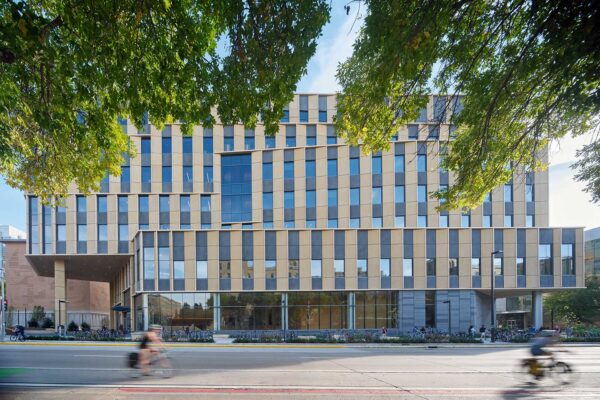
Morgridge Hall achieves LEED Platinum certification
The new home of the College of Computing & Artificial Intelligence achieves the highest level of certification awarded by the U.S. Green Building Council’s Leadership in Energy and Environmental Design (LEED) program.